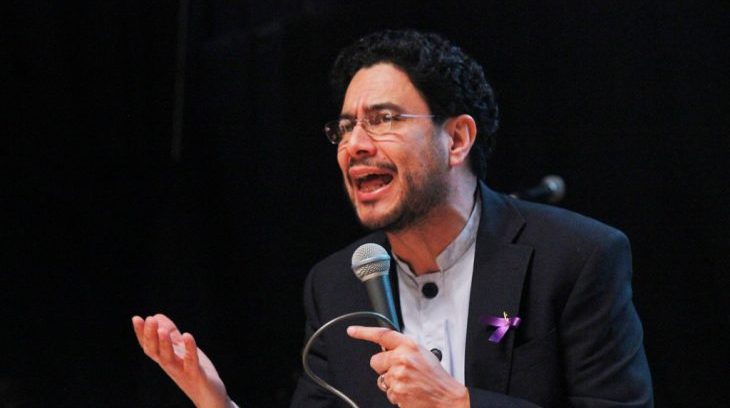

Ahead of the May 2026 presidential election, the candidate for Colombia’s governing Historic Pact was determined in the progressive coalition’s primary election on Sunday 26 October, with left-wing senator Iván Cepeda the clear preference after receiving 1.5 million of the 2.7 million votes cast. This situates Cepeda as the Historic Pact’s favoured successor to current president Gustavo Petro, with hopes that Cepeda will emerge as the presidential candidate of a broad front including centrist and other sectors in a contest against a likely candidate from the right or far-right of Colombian politics. The new government will take office on 7 August 2026.
Cepeda is a historic representative of the Colombian victims’ movement and is a victim himself – his father was assassinated in 1994. His standing and profile have increased in recent months with the court ruling in August that sentenced former president Álvaro Uribe to 12 years’ house arrest, and although this was overturned on 21 October, the decision will be appealed and the case will continue. Cepeda is a very popular figure on the Colombian left and is arguably the country’s best-known progressive figure after Petro and Vice-President Francia Márquez.
Second place in the Historic Pact’s primary went to former health minister Carolina Corcho, who with 666,000 votes is a contender to join the Cepeda ticket as Vice-President. Several Historic Pact politicians who initially announced their candidacy have since withdrawn from the contest and given their support to Cepeda, such as Corcho, Senator María José Pizarro, Senator Gloria Flórez and former environment minister Susan Muhamad.
The primary comes as the Historic Pact is battling legal obstacles. The National Electoral Council (CNE), Colombia’s main electoral authority, has blocked the Historic Pact from merging into a single political party, stating that some of the Party’s seeking the merger had not consulted their members properly. This means that the Historic Pact Party has been unable so far to merge with Petro’s Colombia Humana party. Historic Pact politicians and supporters have accused the political right of seeking to impede the progressive movement’s participation in upcoming elections.
Following his victory, Cepeda called for swift recognition of the Historic Pact’s status. ‘Our political adversaries have created a series of obstacles to prevent us from reaching this stage. It’s truly outrageous and unacceptable that at this point we still don’t have legal status,’ he said, before adding that ‘we are the most influential force.’
Cepeda also urged other political movements in favour of peacebuilding to unite with the Historic Pact. ‘We invite other like-minded forces with a democratic spirit, willing to work toward peace and advance reforms, to join us to pave the way for a Broad Front that will win the elections in the first round,’ he said.
Some political analysts believe that the primary result shows the left in Colombia has solidified and now represents a cohesive political force. They point out that the Historic Pact primary can be related to a recent CELAG poll that showed Petro’s support has increased in recent months, particularly among young voters. Unusually, over 90 per cent of those that voted for him in 2022 think he has fulfilled his promises to them.
Cepeda’s victory has breathed new life into a progressive movement that faces a serious challenge from the right amid US efforts to destabilise and stigmatise the Colombian government. With a little over six months until the first-round of the presidential election, which takes place on 31 May 2026, observers say this is one of the hardest races to predict in modern times. Supporters on the left hope that the Historic Pact emerges victorious to continue the massive task of securing lasting peace and advancing social justice.