
The prospect of an Abelardo de la Espriella government in Colombia carries alarming implications for peace, human rights and the fight against inequality. It also highlights the reality of what many in Colombia are calling new forms of US intervention.
For a man who has presented himself as an ‘outsider’, the millionaire lawyer De la Espriella has long operated close to wealth and power. Whether through his father’s warm relations with ultra-right president Álvaro Uribe in the 2000s, his lucrative career representing paramilitaries behind atrocities, or his years rubbing shoulders with Miami’s conservative jetski-set, nothing suggests De la Espriella would govern in the interests of anyone other than the elite.
On 21 June, Colombia’s presidential election runoff saw De la Espriella take 49.7 per cent of the vote, a single percentage point over his rival, left-wing senator and human rights defender Iván Cepeda. Turnout was high by Colombian standards, at 64 per cent, as both candidates increased their votes from the first round three weeks earlier. In an extraordinary run, Cepeda closed the gap from close to one million votes to just under 250,000 in the runoff, outstripping Petro’s 2022 winning total – but it was De la Espriella who emerged the victor. The result finds Colombia evenly divided and, despite defeat, shows mass electoral support for the left.
Outgoing president Gustavo Petro cited voting irregularities that were refuted by the European Union and Colombia’s Civil Registry. Petro accused Israel of interfering with electoral software to undermine a candidate who would maintain support for Palestine, which has seen Colombia end coal exports and arms purchases with Israel. It follows allegations in France of Israeli meddling in elections. The row over the technology used in Colombia’s elections goes back months: Petro raised concerns over the private company used to verify votes, as its Colombian owners are under investigation for fraud in Mexico and convicted fraudsters in the US.
Subsequently, Colombian intelligence investigated a January meeting between De la Espriella and the company owners, amid allegations over tampered software that allowed changes to be made without being registered by the system. Petro also stated legal observers had been prevented from entering some polling stations while unsigned polling forms had been submitted. There was also a disparity between the ratio of votes within Colombia and that seen in the US, to De la Espriella’s advantage. Cepeda’s campaign challenged these results but, three days after the runoff, recognised the result and conceded defeat. Any investigation will now likely be quashed.
De la Espriella followed the Trumpist playbook in his use of social media and influencers to portray a brash and confident persona. He was abetted by sympathetic right-wing media that subtly ignored the more vulgar and violent rhetoric, while playing up his connections to the US – of which he is a citizen and member of the Republican Party. De la Espriella has threatened to “gut” the left, who he calls “scum” that “cause me revulsion”. Openly homophobic and misogynistic, on television he encourages women journalists to inspect his genitalia and brags about killing cats with fireworks.
In his 20s, his Foundation for Peace Initiative (FIPAZ) platformed leaders of paramilitary death squads at university forums and campaigned against their extradition. In 2011, Colombia’s Supreme Court of Justice stated that FIPAZ “did not promote peace when the [paramilitary] self-defence groups were massacring, disappearing, killing and torturing”. A Supreme Court-ordered investigation into De la Espriella over alleged conspiracy and money laundering was blocked by the then-Attorney General, a personal friend of his. Indeed, the supposed “outsider” has enjoyed some very useful inside connections.
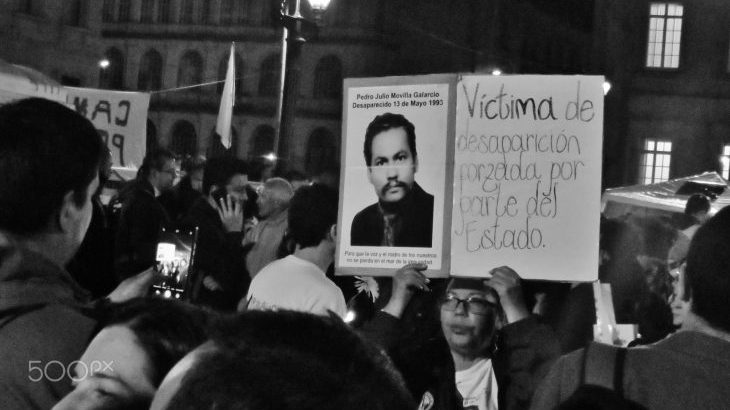
Unlike De la Espriella, Cepeda is a longstanding figure within Colombian politics, where he is a national figurehead for peace, human rights and social justice. He was elected to congress in 2010, having founded the National Movement for Victims of State Crimes (MOVICE) to campaign for justice over state and paramilitary violence. Victims included survivors of the state-orchestrated killings of over 5,000 members of the left-wing Patriotic Union (UP) party in the 1980s-90s. After the assassination of his father, UP senator Manuel Cepeda, in 1994, threats forced Cepeda into exile in 2003. Cepeda is widely respected, and his campaign attracted support from across the political centre and left. He will be a leader of the opposition to the incoming administration.
When De la Espriella takes office on August 7, Colombia will be the latest Latin American country to move drastically rightwards, following recent elections across the region. He seeks to reverse many of Petro’s policies, which lifted some four million people out of extreme poverty. Petro’s ambitious reform bills in education, healthcare, labour rights and pensions ran into intense opposition in congress, where his Historic Pact group lacked a majority and was obliged to compromise with the centre to pass legislation. This saw the labour rights bill watered down, while education and healthcare reforms became deadlocked. As such, the Historic Pact struggled to bring about drastic material improvements to people’s lives that many hoped for. Yet millions of Colombians benefitted nevertheless: the minimum wage was increased, extreme poverty reduced, rural GDP and employment increased, unemployment fell. The measures were popular and De la Espriella’s campaign was forced to promise it would not reverse popular policies on education and minimum wage.
De la Espriella intends to issue 90 decrees that can be summarised as drastic cuts to the state and social spending, many of which would violate the constitution. Disparities in education and healthcare will be deepened, with scarce public resources channelled towards the private sector, a practice long pushed by the right and resisted by education unions. Proposals to slash the state by 40 per cent – with historic state neglect already depriving parts of the population with access to education, clinics, clean water and decent roads – will further marginalise millions of people who already struggle to attain dignified living conditions and wages.
Given the expansion of armed groups in recent years, De la Espriella pledges to escalate military confrontation. Ongoing conflict has fuelled right-wing criticism of Petro’s “Total Peace” policy of prioritising dialogue to end violence. While notable advances have led to decommissioning of weapons and removal of illicit crops, some armed groups have abandoned talks. In April, an attack on a bus killed 25 civilians in Cauca, while the following month 52 people, including several minors, died in clashes between rival groups in Guaviare. This has fed public disillusion with Total Peace to the extent that continued belligerence of self-described “guerrillas” and other armed groups has benefitted right-wing actors. De la Espriella promises to eliminate these groups, yet it is unclear why 60 years of failed military strategy would suddenly succeed today. Many rural communities fear renewed war will produce more victims, displacement, poverty and violence.
The president-elect has defined himself as the candidate of law and order, reflected in his party’s name, Defenders of the Homeland. His hardline approach to insecurity and crime echoes far-right candidate-turned-president Álvaro Uribe in the early 2000s. Uribe’s eight-year rule pushed concepts of the “internal enemy” to viciously crack down on civil society activism and protest. Trade unions, peasant organisations and students were among those targeted by security forces and their paramilitary collaborators. In 2021, Colombia’s transitional justice court found that during the Uribe government the army murdered 6,402 civilians, mainly young people, and portrayed them as guerrilla fighters to imply success in counterinsurgency operations. The killings became known as “False Positives”. In a chilling echo of Uribe’s rhetoric, De la Espriella pledges to kill “drug traffickers and terrorists” without respite. Such pronouncements carry grave undertones: he already plans to shut down the National Protection Unit that provides bodyguards to activists.
De la Espriella has confirmed Colombia will join Trump’s ‘Shield of the Americas’ initiative. This claims to be focused against the drugs trade and criminality: however, the grouping is entirely formed of right-wing governments allied to the US and many consider these rationales to be fig leaves for keeping the left down, and China and Europe out. The US has ignored international law and due process to incinerate small fishing boats in air strikes and abduct heads of state under cover of night. There will be little noise from Washington if its partners engage in similar practices domestically.
The regional anti-left agenda is evident in Colombia. In March, a US court opened a criminal investigation into Petro over alleged drugs trafficking: a fabrication but one which could open the door for the current president’s extradition. Colombia’s neighbour Ecuador, under Trump loyalist Daniel Noboa, imposed tariffs on Colombia after baselessly accusing Petro of ties to criminal organisations. Meanwhile, the US case against Maduro alleges complicity with Colombian guerrilla movements, the FARC and ELN, groups he met with in efforts to promote peace in Colombia. Cepeda has also facilitated peace talks with both groups in the past, despite his disagreement with their methods. Will these efforts now be manipulated by the US and its allies in Colombia to remove Cepeda and other leading figures from the scene?
Under De la Espriella, Colombia will return to its historic position – only broken under Petro – as a promoter of US geopolitical and economic interests. Multinationals will enjoy unrestricted access to Colombia’s resources as the Petro government’s goals to transition from fossil fuel dependency to sustainable energy are ripped up. The ban on fracking and new exploration licenses will be overturned immediately. Those who oppose these measures, which will greatly harm local communities and fragile ecosystems, will be targeted and smeared under the security doctrine.
Faced with a nightmare scenario, how does Colombia’s left respond? Well, the slender margin of victory reduces De la Espriella’s mandate to ride roughshod over democratic institutions. Furthermore, the Historic Pact is the largest congressional bloc until 2030, and it will defend social gains and constitutional rights to health, decent work and peace. De la Espriella’s Defenders of the Homeland, with only four seats, may need to build alliances with the centre that could dilute his more extreme proposals.
On the streets and in the countryside, Colombia’s social movement will make its presence felt through strikes, mobilisations and indigenous-led regional shutdowns. The main trade union federation, the CUT, has already “declared itself in opposition to the fascist and neoliberal [incoming] government … characterised by open, unashamed and unacceptable US interference in our country’s internal affairs.” A national uprising on the scale of 2021’s mass protests that paved the way for Petro’s election could reoccur if proposed tax reforms hit people’s pockets. Colombia will not be easy to govern for De la Espriella – the concern is that violent repression through his paramilitary allies will be his method to confront challenges from below.
There is also the Uribe question: although the former president’s Democratic Centre party backed De la Espriella in the runoff (its own candidate, Paloma Valencia, lost in the first round), cracks are already appearing in the façade of alliance. De la Espriella and Valencia’s camps clashed in the election campaign, while, after the runoff, Uribe publicly criticised a key De la Espriella advisor for assisting Cepeda to investigate Uribe’s alleged links to paramilitary death squads. The political right was fragmented during Petro’s term and De la Espriella may find he has more than just a consolidated and resistant left to contend with. Uribe is unaccustomed to playing second fiddle to other conservative politicians.
The new government is also constitutionally bound to implement the 2016 peace agreement, despite longstanding hostility on the Colombian right, and uphold guarantees over political participation and security. These points retain strong support within the centrist establishment, as well as at the United Nations – perhaps one reason why De la Espriella says he will withdraw Colombia from the UN – and there will be political pressure to fulfil constitutional obligations. Divergence from the established order could find elements of De la Espriella’s past dragged up in ways he would prefer to avoid.
Nevertheless, Colombia is preparing for a period of far-right rule that has progressive organisations, the working class and the movement for peace in its sights. As internationalists, our task must be to strengthen our alliance with these organisations and help to defend their members. Colombia’s popular movement has shown extraordinary resilience during decades of dirty war. We must not leave them to stand alone.